
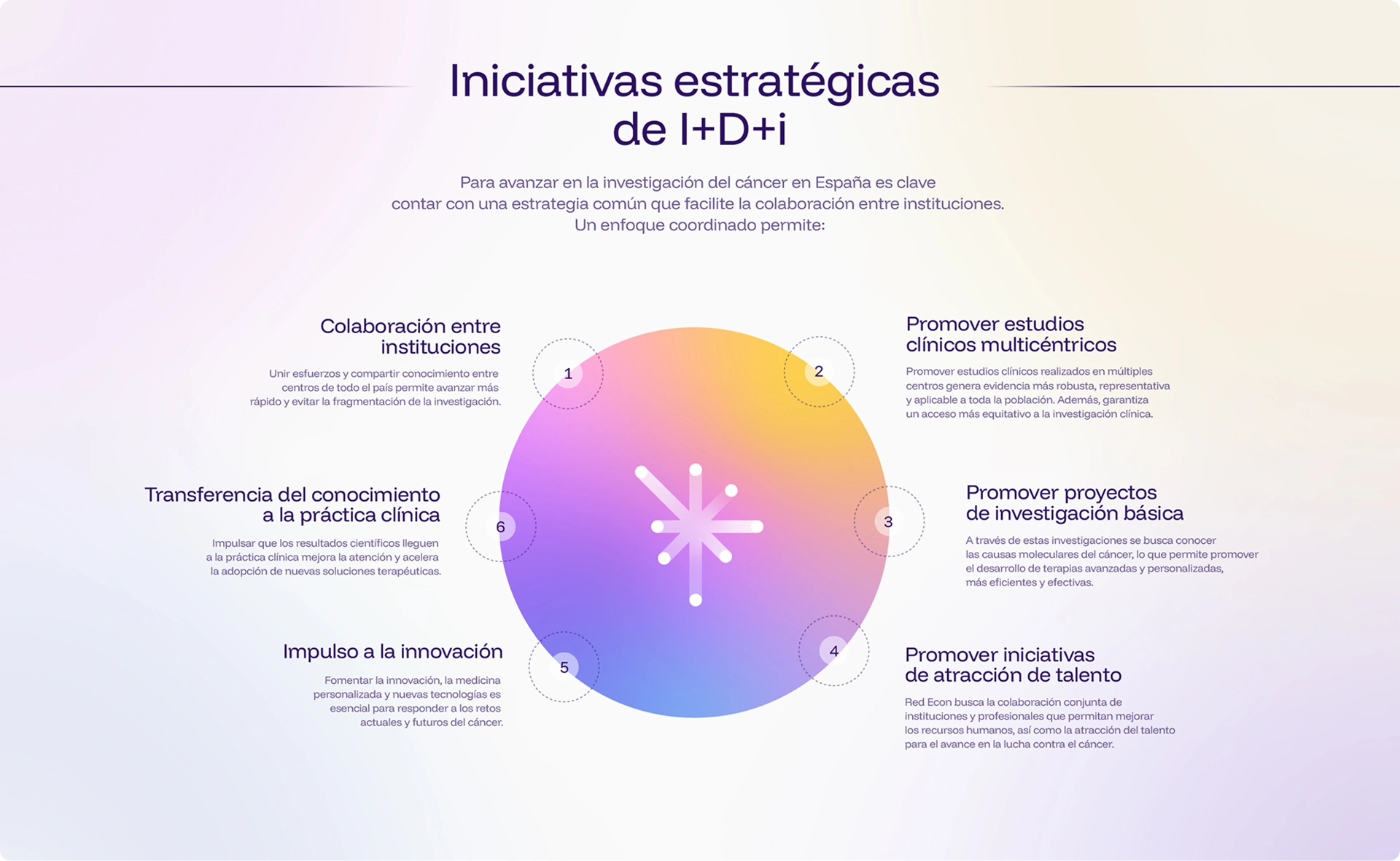
Iniciativas estratégicas de I+D+i

Investigación y desarrollo en la lucha contra el cáncer

La investigación es una pieza clave para transformar la atención oncológica y avanzar hacia mejores resultados en salud. nuestros expertos y expertas ofrecerán asesoramiento para la definición de un Plan Nacional de I+D+i en cáncer, capaz de coordinar capacidades, identificar prioridades y promover la innovación en todo el territorio.

¿Por qué es necesario?
Nuestras aportaciones

Del diagnóstico a la hoja de ruta

La importancia del trabajo estratégico coordinado en I+D+i 

Institución líder del grupo de trabajo:

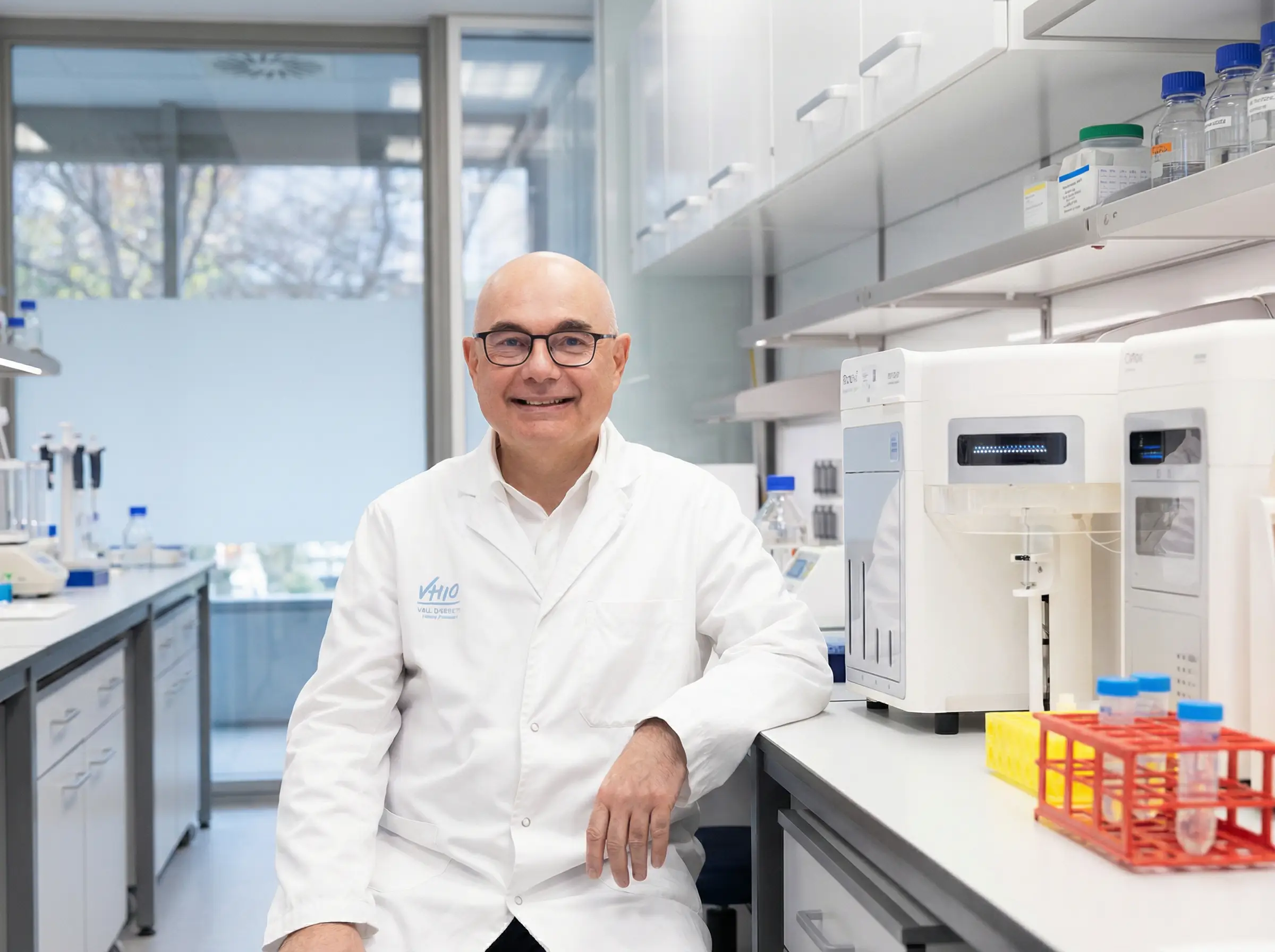
VHIO

El Vall d’Hebron Institute of Oncology (VHIO) lidera el área de Iniciativas estratégicas de I+D+i dentro de la Red ECON. Su experiencia en medicina personalizada y oncología traslacional lo posiciona como un referente en el desarrollo de estrategias colaborativas para avanzar en la investigación del cáncer. 

Descubre nuestras áreas estratégicas

Conectar el ecosistema científico-sanitario con las autoridades sanitarias del ámbito nacional y autonómico para impulsar la adopción de políticas contra el cáncer basadas en el conocimiento y la evidencia.

La red analiza, define y propone estrategias que permitan a España responder de forma eficaz a los retos actuales y futuros del cáncer, alineándose con los objetivos nacionales y europeos de salud pública.

Últimas noticias

Un espacio para comunicar avances, eventos, informes clave y la actividad de la red.
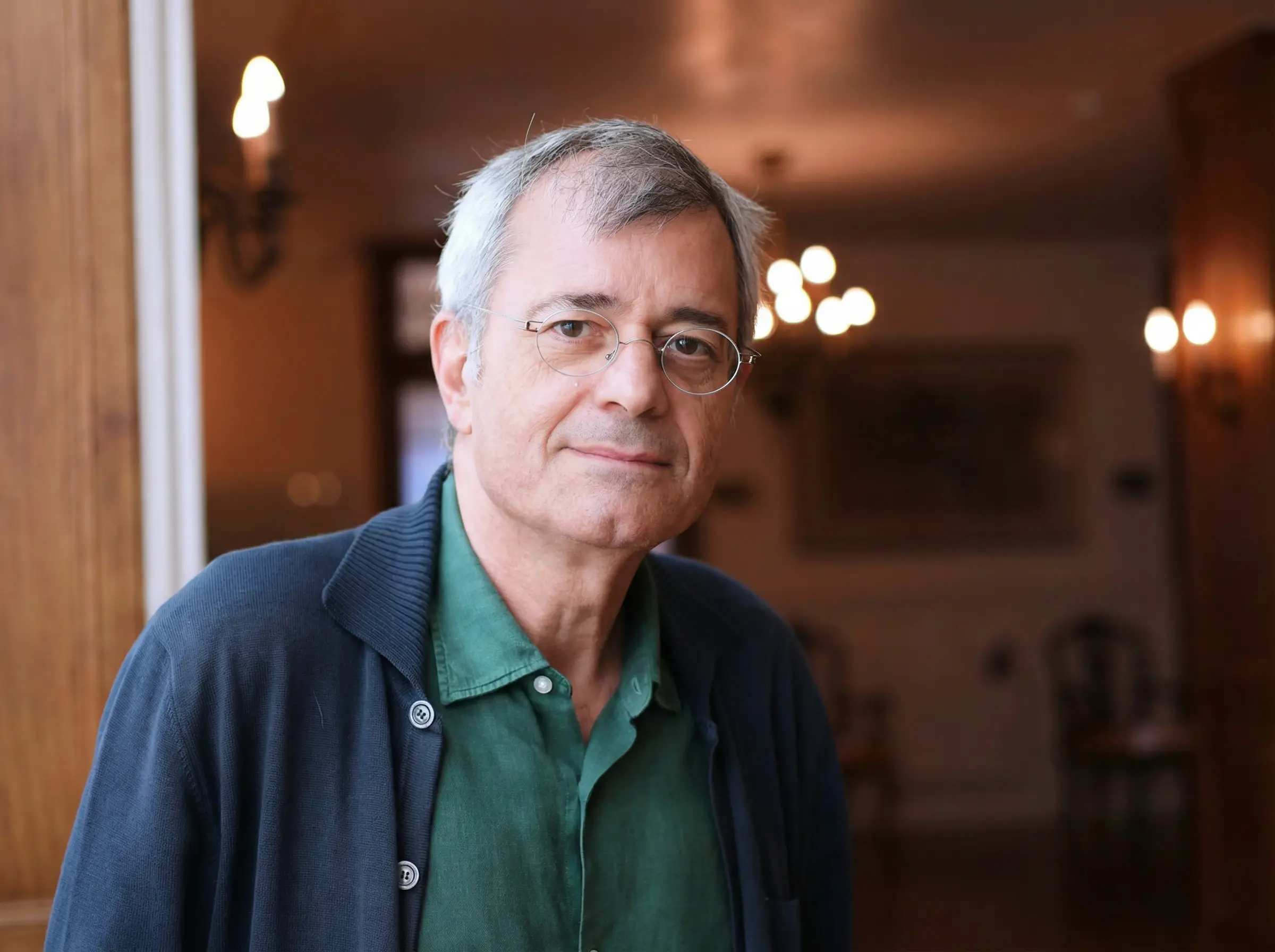
Josep Maria Borras

Josep Maria Borras is an epidemiologist, full professor of Epidemiology and Public Health at the Department of Clinical Sciences of the University of Barcelona and principal advisor to the Catalonian Cancer Strategy at the Department of Health (since 2006), as well as scientific coordinator of the Spanish Cancer Strategy (since 2008).

Josep Maria studied Medicine at the Autonomous University of Barcelona (UAB), graduating in 1981. He subsequently gained his PhD in Medicine at the same university in 1990. He also holds a Master in Methodology in Health Sciences (UAB).

He began his activity as an epidemiologist working at the Department of Health in community chronic diseases prevention and later in the cancer control area of the Department of Health (from 1982 to 1991). He was also head of Evaluation in the Health Technology Assessment Office at the Department of Health (1992-1996).

From 1997 to 2006, he served as director of the Catalonian Institute of Oncology, leading the development of the Institute, which included a research program with Cancer Control, Prevention and Cancer Epidemiology and Registry as one of its components since its initial deployment.

He led the organizational changes that were instrumental to build the first network of cancer care, providing close medical oncology care to the residence of patients and setting an organized referral pathway when required to the tertiary care hospital.

From 2002, he was appointed as associate professor of Epidemiology and later, in 2019, full professor. He served as the first Chairman of the Committee in Pharmaco-therapeutics of the Catalan Health Service for the evaluation of new cancer drugs from 2010 to 2014.

This body is responsible for evaluating every new indication of cancer drugs and other costly therapies delivered at hospitals in the Catalan Health Service and deciding on the way innovations are introduced into cancer services.

Dissemination activities are one of his main interests, particularly those involving cancer patients. One of the most relevant is the direction and organization of the yearly workshop with representatives of breast cancer patient organizations at the Menéndez Pelayo International University in Santander.

This activity brings together about 70 women diagnosed with breast cancer who are involved in patient activism at regional or national level. The aim is to share medical advances and ways to improve cancer care organization according to the needs and preferences of patients.

Research activity

He has authored or co-authored almost 300 peer-reviewed papers, with an H-index of 55 (Google Academia). His main fields of research are health services research, specifically the determinants of utilization of cancer services and the evaluation of outcomes, as well as the application of epidemiology to cancer services planning and evaluation.

His most relevant contributions in these areas can be organized into three main areas of research:

  • Applying epidemiological methodology to cancer control planning and evaluation.

    His team has worked in several areas, including European projects with the European Society for Radiotherapy and Oncology (ESTRO) to use cancer registry data at EU level to assess evidence-based needs for radiotherapy.

    This work has resulted in country-by-country analyses of the required number of patients receiving external radiation oncology and has evolved to assess reimbursement models in Europe, develop costing models for European healthcare systems and create a value-based radiation oncology project aimed at assessing the contribution of innovations in this field.

    The team has also worked on Bayesian models to better estimate the incidence of rare cancers within the framework of a Joint Action on Rare Cancers funded by the EU, as well as evaluating the impact of the COVID pandemic on cancer diagnosis and population perceptions of cancer and help-seeking behaviour.

  • Adherence to cancer treatments.

    His group has explored adherence to home chemotherapy in colorectal cancer, oral endocrine therapy and the impact of lack of adherence on recurrence and mortality.

    These projects have combined population-based data with clinical records and, more recently, real-world data, with the aim of identifying the best ways to support clinicians in assessing adherence during clinical encounters.

  • Evaluating cancer control policies to improve cancer outcomes in the health system.

    Two major policy interventions implemented in Catalonia have been the centralization of complex cancer surgery and the use of multidisciplinary teams to organize clinical decision-making and the delivery of cancer treatments.

    His team has used rectal cancer as a model to evaluate the impact of these interventions, as well as studying laparoscopic and robotic surgery, transanal total mesorectal excision and centralized surgical procedures for pancreatic and ovarian cancer.

    They have also contributed to the development of models assessing the impact of distance on equity and outcomes, using data from NHS England to support rational policies for the distribution of reference hospitals.

In summary, his research program has focused on assessing the quality of cancer care and identifying factors that can support the implementation of policies aimed at improving quality of care and clinical outcomes in health services.

A relevant aspect of this work is the strong cooperation established with clinical leaders, promoting interaction between research and clinical practice to facilitate the implementation of change.

His projects are also characterized by a multidisciplinary approach, bringing together professionals from epidemiology, biostatistics, health economics, political science, pharmacy and clinical practice.

Knowledge transfer and research impact

The transfer of knowledge from research is an essential component of Josep Maria’s activity. This has been developed at policy level, advising on ways to improve cancer care organization from both national and international perspectives.

  • Josep Maria is the scientific coordinator of the Spanish Strategy against Cancer, taking care of building consensus on the most suitable measures to improve cancer control and prevention in the Spanish NHS.

    This involves continuous discussion to establish the priorities included in the NHS cancer strategy, which is updated approximately every five years, and serves as a bridge between policymakers and research knowledge.

  • He has been involved in five different Joint Actions between the European Commission, national governments, scientific societies and patient organizations aimed at building consensus at EU level on priorities for cancer control.

    These activities have contributed to European guidelines and policy measures related to cancer diagnosis and treatment, rare cancers and pediatric oncology.

  • More recently, he has led contributions to the Standards of Care for Comprehensive Cancer Centers, linked to the European Beating Cancer Plan published by the European Commission in February 2021.

    He is also leading work on capacity building and improvement within the Joint Action on Comprehensive Cancer Centers, aimed at fulfilling the objectives established by the European plan by 2030.

  • Josep Maria led the policy consensus on multidisciplinary cancer care with European scientific societies and contributed to reviews that have subsequently been included as key references in numerous European scientific guidelines.

    More recently, he contributed a chapter on a systems approach to cancer care in a book published by John Wiley for the Union for International Cancer Control (UICC).

  • He has also participated in several European guidelines and consensus initiatives on rectal cancer, including the EURECCA consensus, and contributed to international projects aimed at standardizing comprehensive patient-centered outcome measurement.

Josep Maria has worked with international health organizations such as the World Health Organization (WHO), the International Atomic Energy Agency (IAEA), the European Commission and the Union for International Cancer Control (UICC) on cancer planning and evaluation at population level.

He contributed to the WHO World Cancer Report (2020) and is currently involved in the development of new guidelines for planning radiation oncology resources at national level.

Overall, his knowledge-transfer activity ranges from evidence-based policy proposals and research into health services within the Spanish NHS to the development of guidelines for European scientific societies and collaboration with international health organizations.

Supervision and mentoring experience

Josep Maria has served as director of PhD theses for 14 doctoral students, four of them during the last five years, all obtaining the highest score.

He has also served as tutor for 25 undergraduate students in their research work before graduation and as director of five Master’s theses.

He currently coordinates two courses at the University of Barcelona: one within undergraduate Medicine studies and another within an official Master’s program.

Additional merits

Josep Maria Borras is a member of the editorial board of Radiotherapy and Oncology and reviews papers for several scientific journals.

He is also a member of ESTRO, SEOR, ESMO, SEOM and the Spanish Society of Epidemiology.

He is involved in several international activities aimed at supporting and evaluating the implementation of cancer control plans at national level. He has been designated as an expert by the WHO, PAHO and IAEA to participate in cancer missions in Armenia, Albania, Georgia, Romania, Mexico, Panama, Ecuador and Laos.

The objective of these missions is to support national cancer plans and assess priorities and outcomes. He has also participated as an expert in drafting documents on Comprehensive Cancer Centers published by the IAEA and WHO.

In addition, Josep Maria has contributed to the ESMO Global Curriculum in Medical Oncology in the section on Cancer Planning and has participated in the activities of the NGO City Cancer Challenge, both in teaching activities and in the development of its conceptual model.

Finally, he has participated in several committees evaluating programs and research grants in France, Portugal and the European Union, including evaluation panels linked to public health, scientific employment, Horizon programs and epidemiology and social sciences in cancer.

Josep Tabernero

Dr Josep Tabernero currently serves as Head of the Medical Oncology Department at Vall d’Hebron University Hospital, Director of the Vall d’Hebron Institute of Oncology (VHIO) and Professor of Medicine at UVic-UCC.

His research focuses on molecular targeted therapies, specific oncoproteins and novel immunotherapies, with the aim of advancing and accelerating more effective personalized cancer treatments for patients with genetic lesions or pathway dysregulation.

Dr Tabernero’s expertise also includes predictive markers of response to anti-cancer therapies and the development of innovative preclinical models, including patient-derived xenografts and organoids, to study tumor development.

He has co-authored nearly 700 peer-reviewed papers, with an H-Index of 129, and serves on the Editorial Boards of several leading scientific journals, including Cancer Discovery, Clinical Cancer Research and Nature Reviews Clinical Oncology.

Dr Tabernero’s international contributions to oncology include his role as former President of the European Society for Medical Oncology (ESMO) from 2018 to 2019, as well as his active membership in major cancer research organizations such as AACR and ASCO.

Since October 2023, he has also served as Chair of Cancer Core Europe and is a member of the Board of Directors of the Organisation of European Cancer Institutes (OECI).

Throughout his career, he has participated in the Educational and Scientific Committees of major international oncology meetings and organizations, including ESMO, ASCO, AACR, AACR/NCI/EORTC, ASCO Gastrointestinal, TAT and ESMO-GI.

Enrique de Álava Casado

Enrique de Álava Casado es médico especialista en Anatomía Patológica y profesor titular de la Universidad de Sevilla, vinculado al Hospital Universitario Virgen del Rocío, donde desarrolla su labor asistencial como jefe de servicio.

Su labor investigadora se desarrolla en el Instituto de Biomedicina de Sevilla (IBiS), donde dirige un grupo centrado en la patología molecular de los sarcomas y otros tumores, con un enfoque traslacional orientado a la medicina de precisión.

Es coordinador del Plan de Medicina de Precisión de Andalucía y lidera proyectos nacionales y europeos relacionados con la genética del cáncer, nuevas dianas terapéuticas e inmunoterapia.

Ha publicado de forma continuada en revistas internacionales de alto impacto y participa activamente en consorcios, redes científicas y actividades de transferencia del conocimiento.

Anna Bigas

Anna Bigas es doctora en Biología Celular por la Universidad de Barcelona (1993), donde inició su investigación en la generación y renovación de células madre.

Durante su carrera como investigadora postdoctoral en el Fred Hutchinson Cancer Research Center (Seattle, EE. UU.), identificó el papel de la vía de señalización Notch durante la diferenciación hematopoyética.

Posteriormente, creó su propio grupo de investigación en el Instituto de Investigación Oncológica (IRO / IDIBELL), donde intensificó el estudio de las vías de señalización Notch, Wnt y NFkB, así como de sus mecanismos moleculares implicados en la regulación del sistema hematopoyético y su transformación oncogénica (1997-2008).

La Dra. Bigas tiene una doble afiliación con el IMIM (desde 2009) y el IJC (desde 2020). Actualmente, es la Directora Científica del CIBERONC (Instituto de Salud Carlos III), donde coordina actividades de investigación colaborativa en cáncer de 50 grupos de investigación distribuidos por todo el Estado.

Además, es miembro de la dirección de la International Society of Experimental Hematology (ISEH) y miembro de la Asociación Española de Hematología y Hemoterapia (AEHH), la European Hematology Association (EHA) y la Asociación Española de Investigación sobre el Cáncer (ASEICA).

Por su relevancia internacional, ejerce como revisora del European Research Council (ERC) y de los Consejos de Investigación de Finlandia y Lituania. Asimismo, colabora ocasionalmente como revisora para el Consejo de Investigación de Noruega, el Medical Research Council del Reino Unido y la Agencia Nacional de Investigación de Francia.

Resumen de privacidad

Esta web utiliza cookies para poder ofrecerte la mejor experiencia de usuario posible. Su información se almacena en tu navegador y realiza funciones tales como reconocerte cuando vuelves a nuestra web o ayudar a nuestro equipo a comprender qué secciones de la web encuentras más interesantes y útiles.